
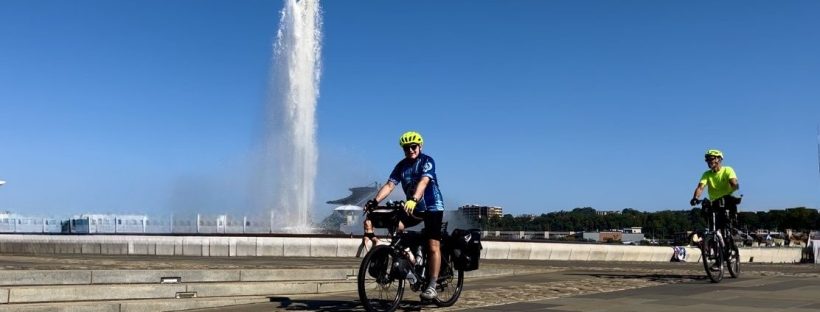
To enjoy an extended odyssey on a bike is to love the orange and purples of wispy morning clouds, the splashes of sunlight in the trees and the soft kisses of a breeze on your cheek. There are some journeys in life you know you have to make — literally and metaphorically — and the cycling adventure my friend, John, and I chose to ride in the fall of 2024 was one of those.
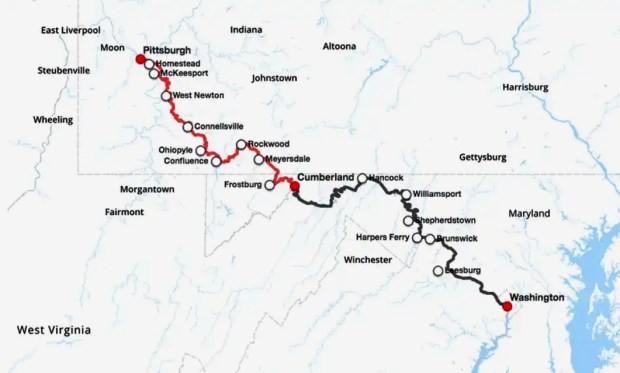
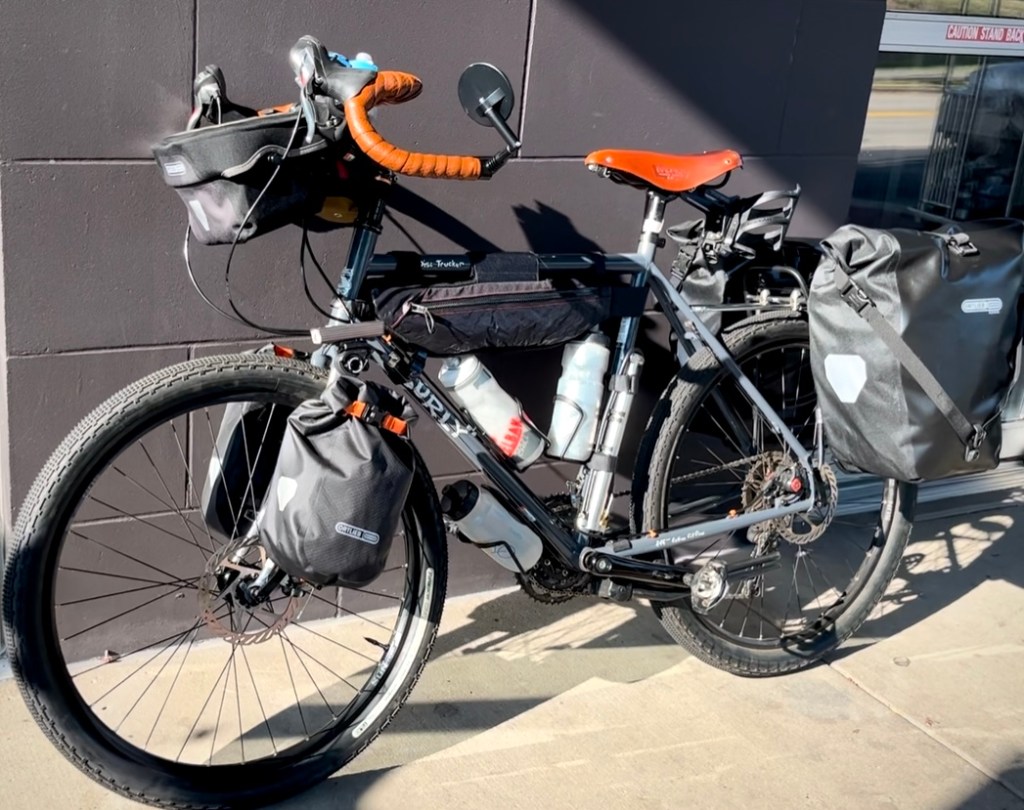
We traveled the popular GAP (Great Allegheny Passage) and C&O (Chesapeake & Ohio) Canal Towpath that stretches from Pittsburgh, Pennsylvania to Washington, DC in mid September. For seven days and 335 miles — 360 when you count the additional distance once we got to our daily destinations — we pushed through gravel paths and mud, soaked up the beauty of nature and embraced the kindness of strangers as we made our way to the capital.
An Inspiring Start at Point State Park
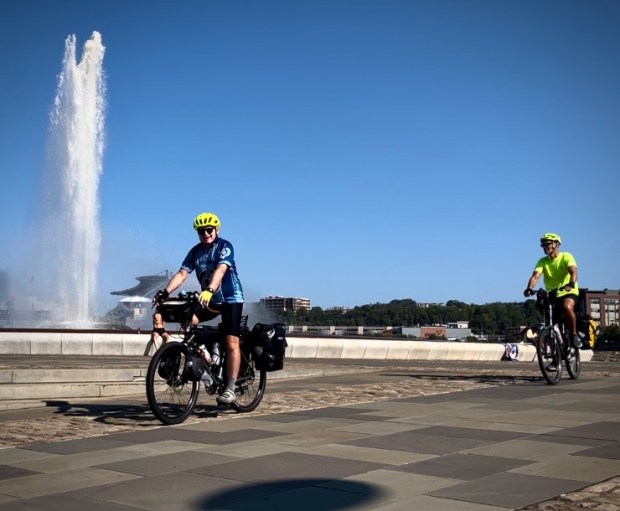
Our journey began at Pittsburgh’s Point State Park where the Allegheny and Monongahela Rivers converge to form the majestic Ohio. Bathed in the golden glow of the bright morning sun, the iconic fountain sparkled, sending a fine mist upward that shimmered like diamonds against the deep blue sky.
Surrounding us was the breathtaking view of the rivers, framed by the city’s skyline and bridges that arched gracefully across the water. With the rugged mountains standing sentinel in the distance and the cool rush of the rivers at our side, we set off on our bikes, — each loaded with clothing and essential supplies we would need for the days ahead.
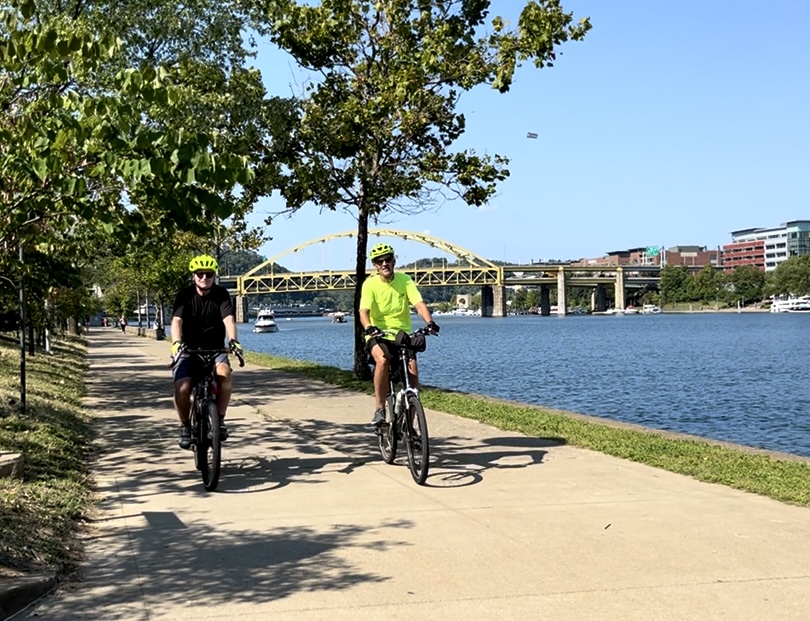
The Great Allegheny Passage (GAP) has a rich history rooted in the transformation of old railroad routes into recreational trails. Initially constructed in the 19th century to support the region’s booming coal and steel industries, the railways played a crucial role in connecting Pittsburgh to Cumberland, Maryland. However, as industries evolved and railroads became less prominent, the paths were abandoned. In the late 20th century, visionaries saw an opportunity to repurpose the railways into a trail that would celebrate the region’s industrial past while promoting outdoor recreation. The official opening of the completed GAP trail took place in 2013, creating a seamless 150-mile stretch from Pittsburgh to Cumberland.


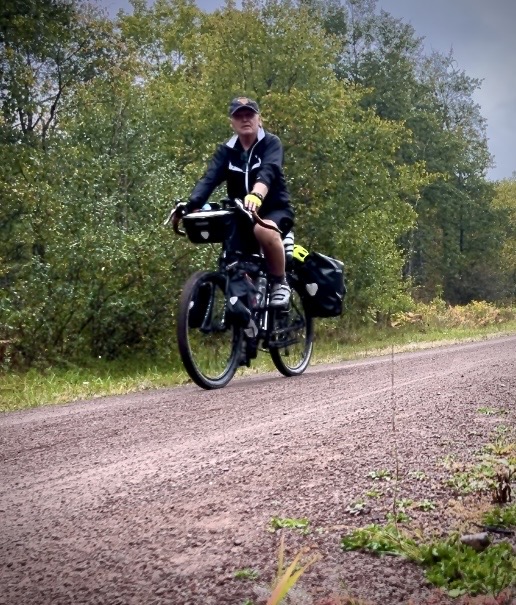

The Chesapeake and Ohio (C&O) Canal Towpath, on the other hand, dates back to the early 19th century. Originally built between 1828 and 1850, the C&O Canal was designed to transport coal and other goods from the Appalachian region to the port of Georgetown in Washington, DC. It followed the Potomac River and played a significant role in commerce before it was rendered obsolete by the advent of the railroad. Preserved as a national historical park in the 1970s, the towpath now serves as a 184.5-mile trail for hikers, cyclists, and history enthusiasts, celebrating the ingenuity and labor of its era.

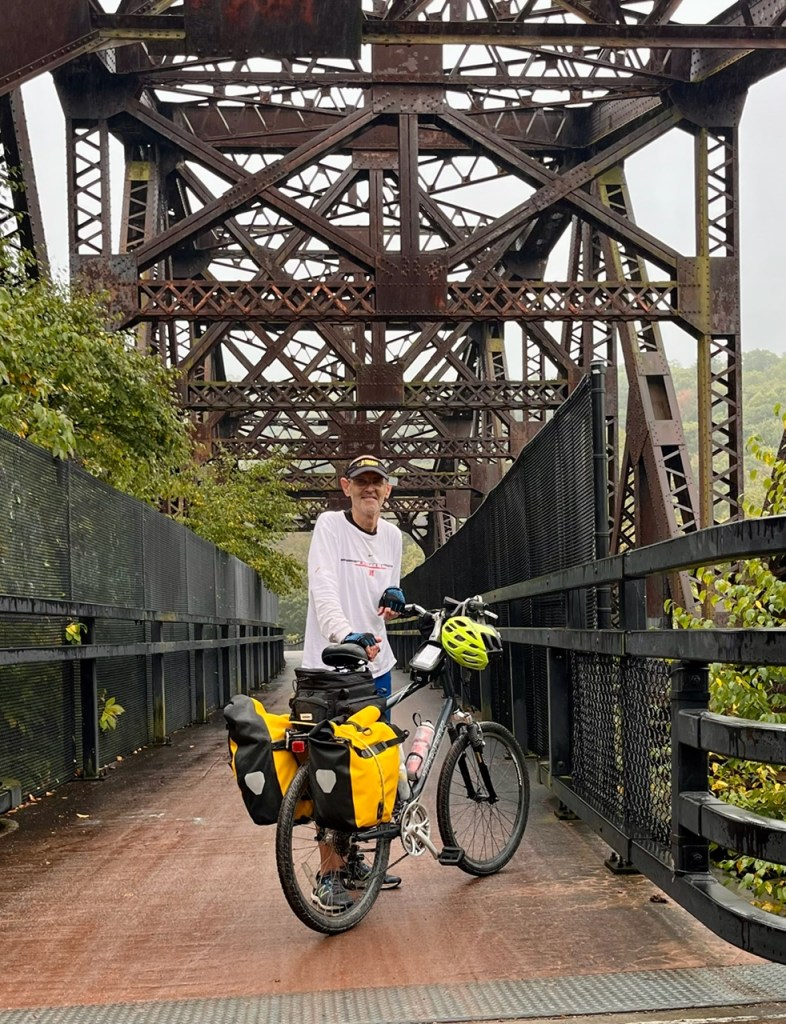
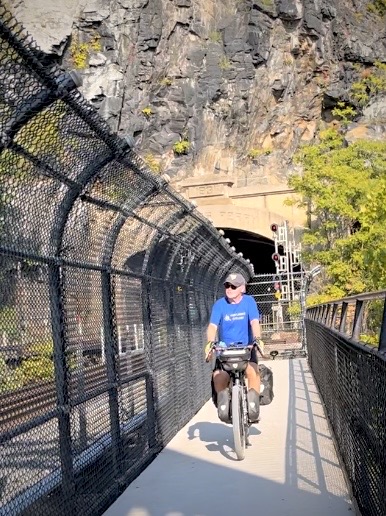
Today, both the GAP and C&O Canal Towpath form a continuous 334.5-mile trail between Pittsburgh and Washington, DC, offering a unique blend of history, scenic beauty and outdoor activity.

Statistics and Current Use
Both trails have become immensely popular among cyclists, hikers and nature lovers. The GAP alone welcomes more than one million visitors annually, with cyclists making up a large portion of this figure. The C&O Canal Towpath, managed by the National Park Service, attracts roughly five million visitors each year, showcasing its role as a cherished outdoor space for those in the DC region and beyond. Together, the connected trails see a wide range of users, from local day-trippers to long-distance adventurers like John and me.
Future Plans for Improvement
Plans for improvements and expansions continue to evolve. The GAP is actively supported by the Allegheny Trail Alliance, which is committed to maintaining and enhancing trail conditions, updating signage and expanding access points to accommodate growing use. The C&O Canal National Historical Park also has ongoing projects focusing on towpath stabilization, infrastructure repairs and enhancing visitor facilities.
The Beauty of Riding Through Nature
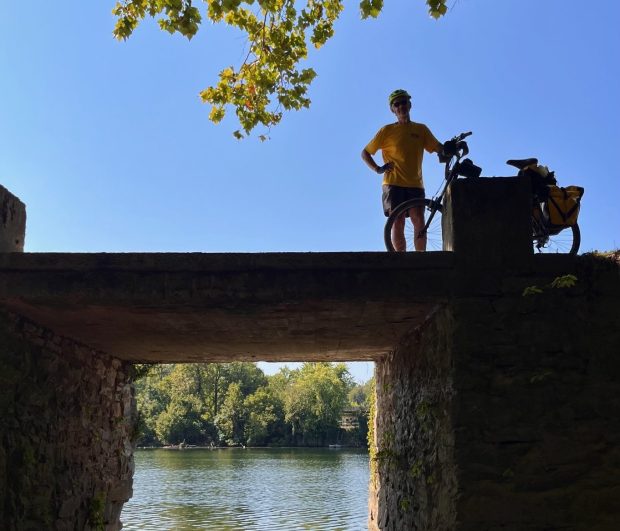
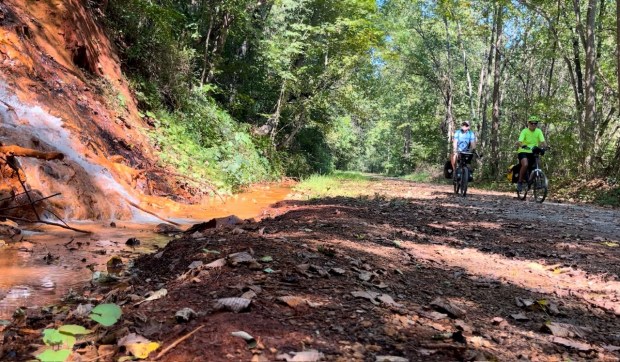
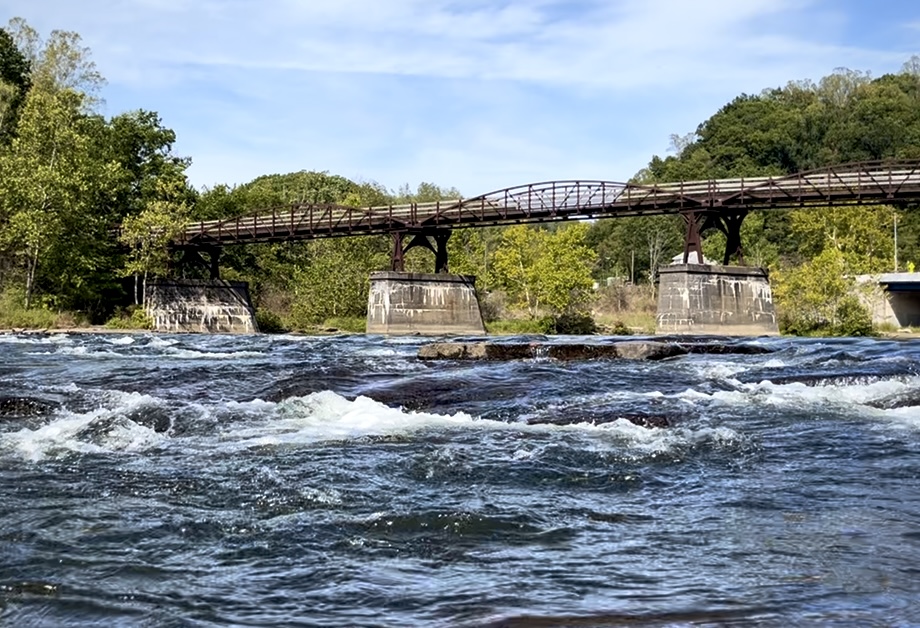
One of the most mesmerizing aspects of our journey was cycling under the natural canopy created by towering trees. The dappled sunlight filtered through the leaves, casting ever-changing patterns on the gravel trail beneath us. It was a visual dance that seemed orchestrated by nature itself, captivating us as we pedaled forward. The air was fragrant with the earthy scent of moss and wildflowers, while the sounds of rippling water from the Youghiogheny and Potomac Rivers accompanied our ride, creating a soothing, rhythmic backdrop.
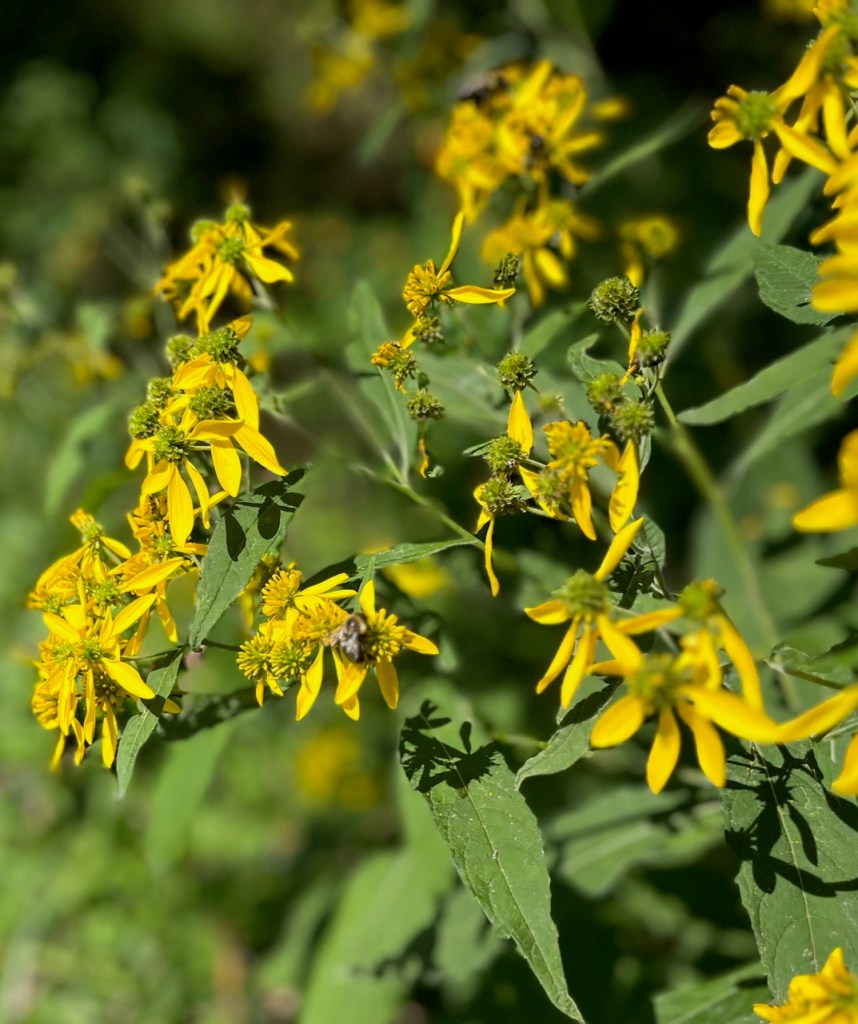

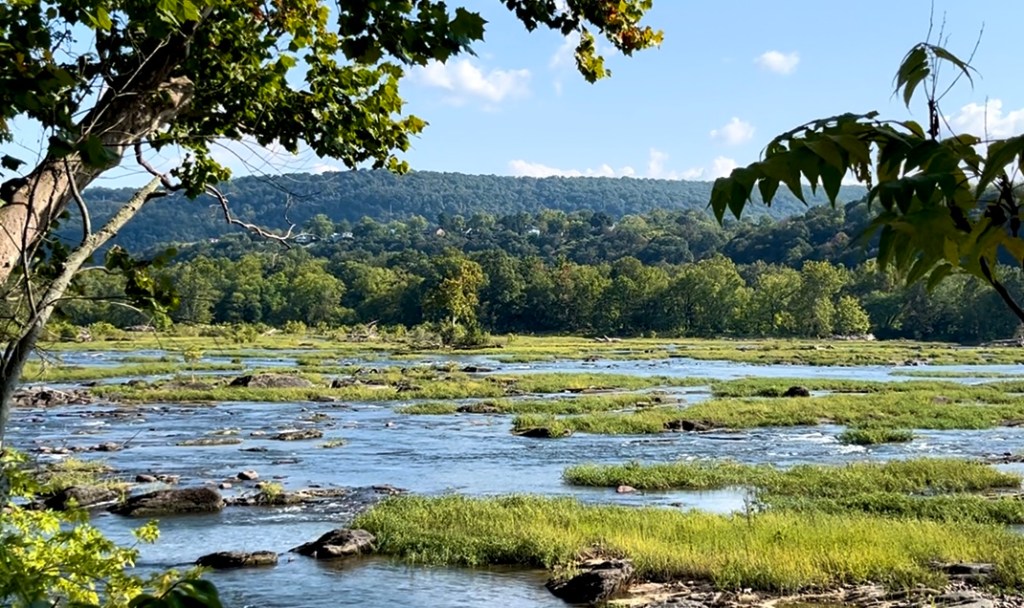
With every mile, the calls of birds, the rustle of leaves in the wind and the occasional ripple of water in the flowing mountain streams reminded us that we were visitors in a living landscape. At times, the beauty was so overwhelming that we found ourselves slowing our pace just to fully take in the splendor of our surroundings.
Tunnels: Eerie Darkness and an Engineering Marvel
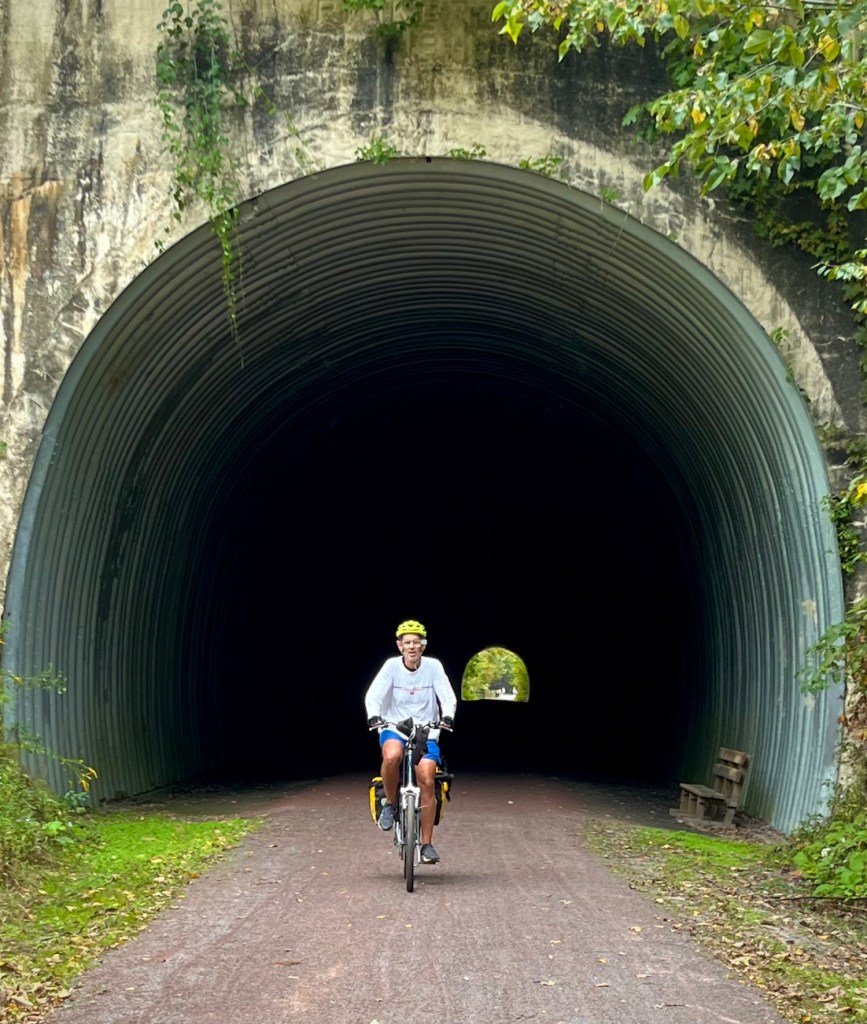
Among the most unique experiences on our route were the tunnels that cut through the hills along the C&O and GAP. The most notable of these was the GAP’s Big Savage Tunnel, a 3,291-foot project built in 1912 and refurbished in 2012. Entering the tunnel, our surroundings changed from the sunlit path to a cold, damp darkness that enveloped us. The only light came from our bike headlights, casting long, shifting shadows on the tunnel walls. Our breathing echoed in the confined space, and the sound of our tires on the wet concrete added to the otherworldly atmosphere.
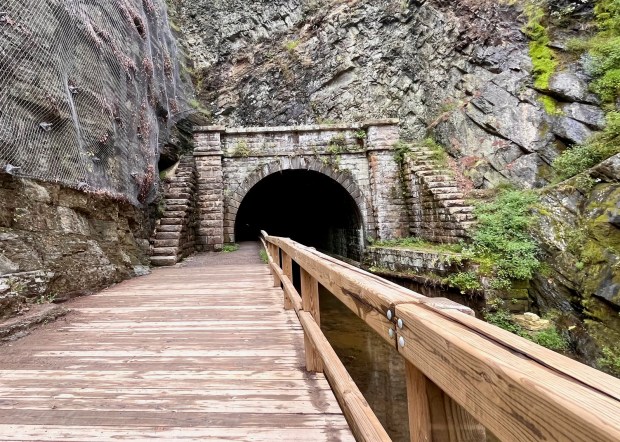
Riding through the darkness, there was a sense of vulnerability, knowing we were temporarily disconnected from the outside world, surrounded only by the echoes and the unknown stretch ahead. But with each passing moment, our eyes adjusted and there was a faint glow as the tunnel’s end grew brighter. The decking and falling-rock mitigation project we saw when we popped out the other side was impressive, and we had to take a few minutes to explore how it was done.
Hospitality and Humanity Along the Way
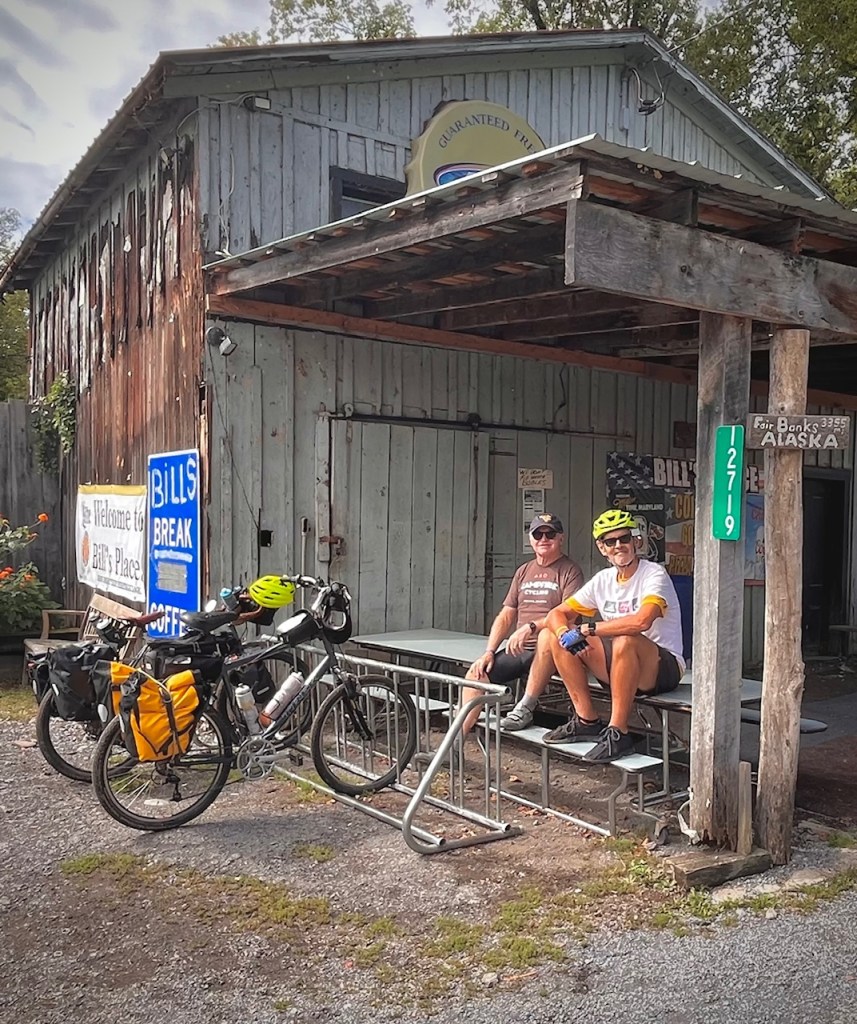
What truly made the journey unforgettable was the warmth of the people we encountered. Each small town we rolled through had its own story, charm and community spirit. Locals offered directions, recommendations for the best spots to eat and stories that made us feel welcome.
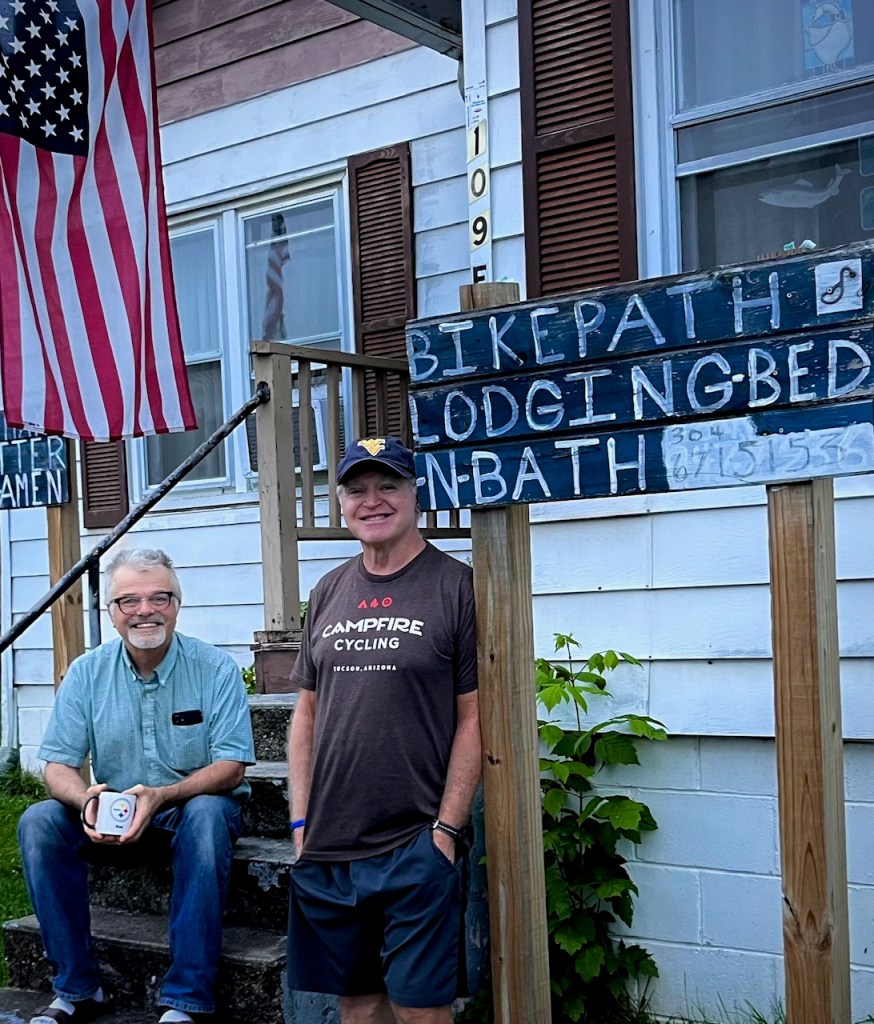
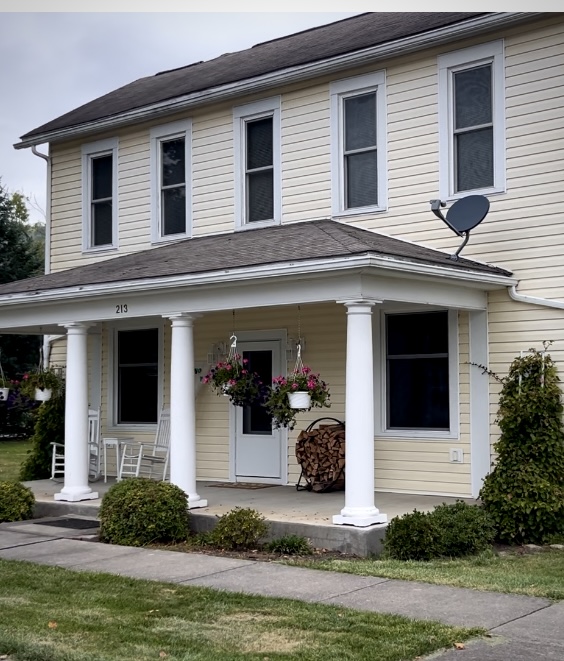
Staying in modest hotels and bed and breakfasts added a layer of comfort to our adventure. We shared stories with b&b owners, fellow cyclists and travelers before setting out for the day. These conversations fueled our motivation, reminding us that this ride was as much about the people as it was about the miles.
Then the Rains Came

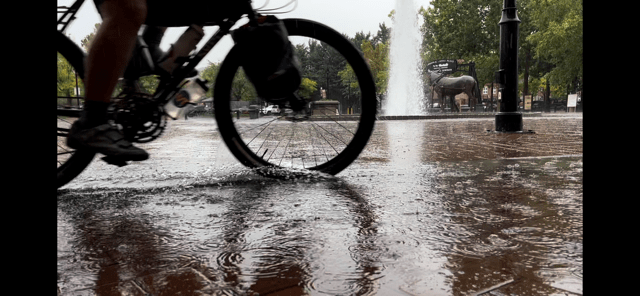
On the morning of day four, we walked out of our downtown Frostburg, Maryland hotel and were welcomed by ankle-deep puddles and foreboding skies. John looked at me through his water-splattered glasses and said with a smile, “As bad as this will be, it’ll be the day we’ll always remember most.” I nodded in agreement, wiped clear the many beads of water on my saddle, swung my leg over top, clipped in my pedals and with that, we were on our way.
We cruised downhill for miles from Frostburg and arrived in Cumberland soggy and cold, but felt an amount of pride to have completed the GAP — the first segment of our two-part ride. We picked up the C&O in downtown Cumberland and soon realized that the once-firm gravel we had experienced on the majority of the GAP had become slick single track that made pedaling a slippery challenge. Mud splattered our bodies and bikes, our gear felt heavier, and our progress slowed. The resolve that had driven us to plan this trip carried us forward and we leaned into the adversity, finding small victories with each mile conquered.

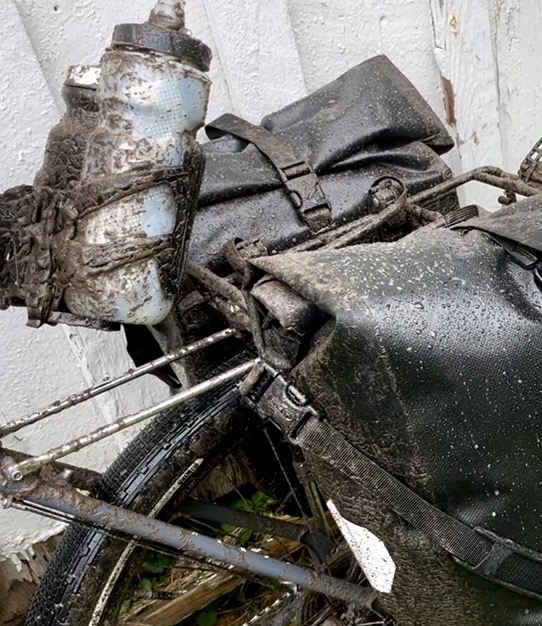
After hours of pushing through the rain, we arrived at our Paw Paw, West Virginia b&b, drenched but triumphant. That evening, after we sprayed down our bikes and muddy rain jackets, we threw our drenched and soiled clothing in our host’s washer and walked to the local gathering spot for dinner. There’s a unique satisfaction that comes from overcoming obstacles as a team, and it bolstered our determination for the days ahead.
The Last Stretch and Sweet Victory
By the time we reached the final miles leading to Georgetown, the path began to fill with more cyclists and walkers, and the Potomac River’s presence felt grander as we approached the city. The moment we rolled onto the historic brick streets of Georgetown, the fact that we had completed the journey we had talked about and planned for months became an unforgettable reality.

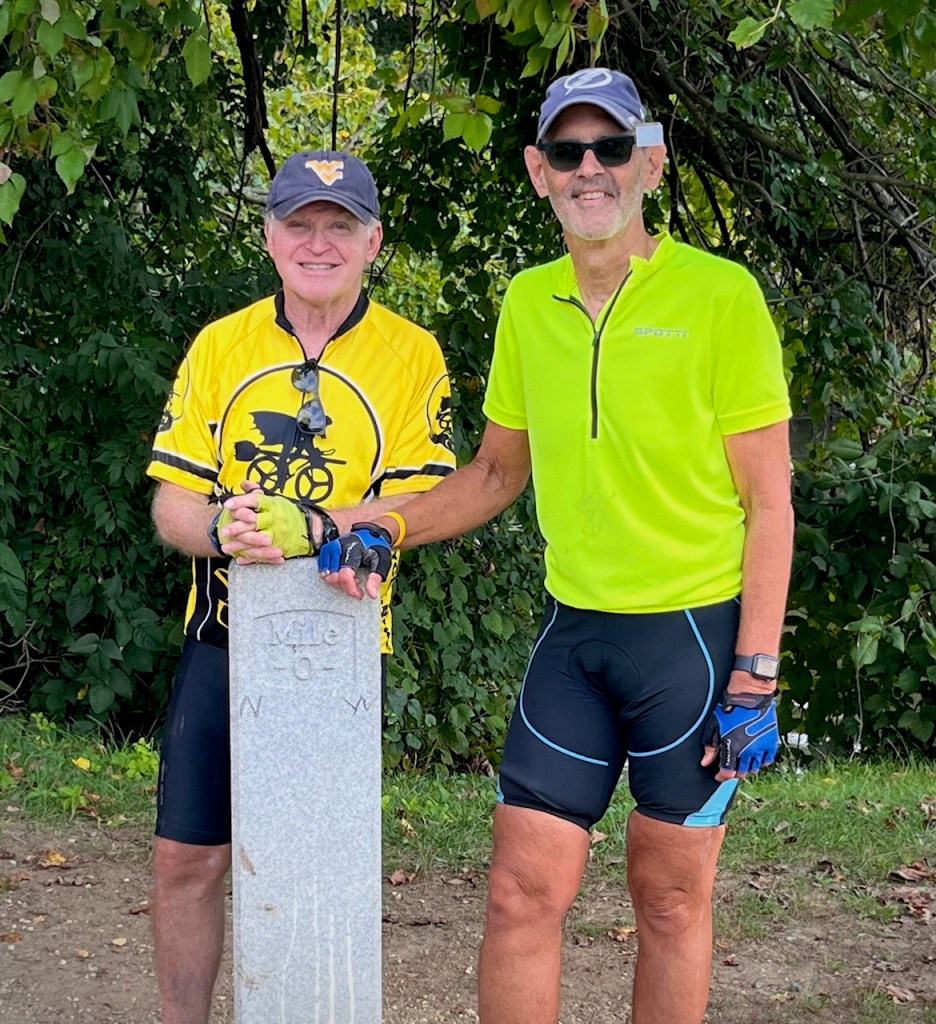
Standing near the ‘Mile 0’ stone marker signifying the starting point of the C&O two centuries before — and the end of ours, I shook John’s hand and said, “This was great. We need to plan another trip similar to this next year.” He smiled, and in only a style John has, replied, “I’m in!”
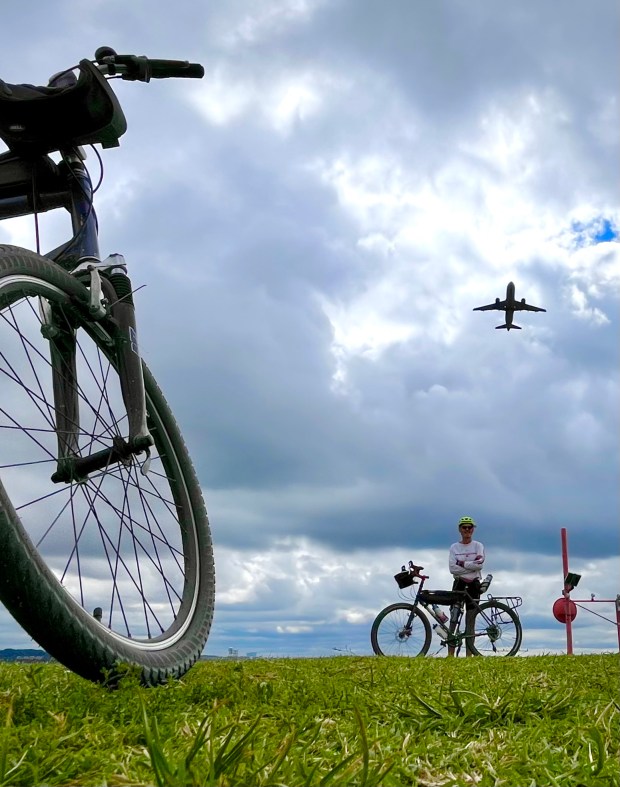
To make the most of a long journey is to love the passage of tiny beautiful moments — the sudden appearance of a rainbow out of the mist, the scent of new spring flowers in an open meadow, and how autumn leaves float seemingly in slow motion to the ground below. This is my wish for all those who approach life this way.
 Rides Like These