
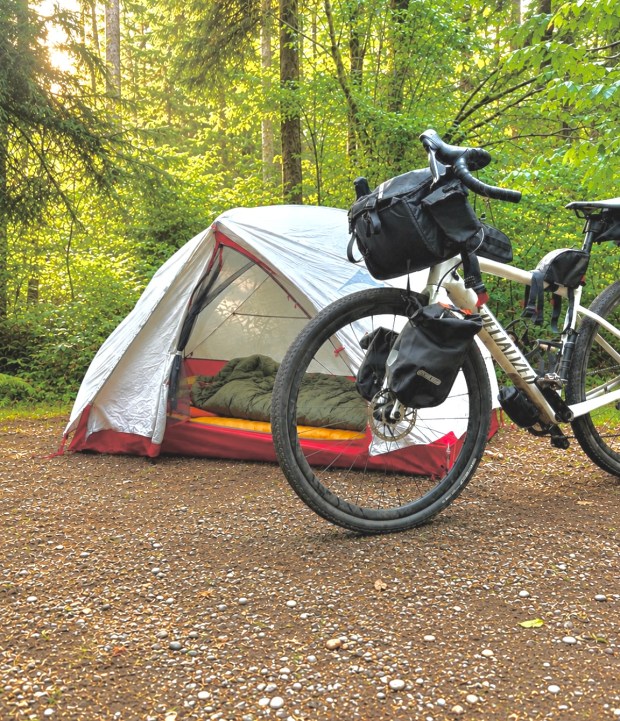
In the early evening of my fourth day of riding, after a particularly difficult afternoon of navigating several miles of narrow single track bike trails on Washington’s Olympic Peninsula in the Pacific Northwest, I leaned my gravel bike against a split rail fence at my overnight campsite. The bike and I had similar visible signs from the day’s challenging ride; there were deep scratches and a fine film of dust on both of us.
We desperately needed a shower.
I’ve primarily been a road cyclist the past thirteen years with the majority of my 80,0000 miles coming on smooth tarmac with gentle climbs and speedy descents. Although I’ve enjoyed what’s become my comfort zone, I’ve lately become intrigued with the idea of planning routes and loading my bike with just the essentials required to survive multiple days on my own — a tent, sleeping bag, food, water, clothing, tools — and then heading out on mostly quiet roads, secluded bike paths and gravel rail trails in rural settings and small towns.
But I needed to improve my navigation and bikepacking skills before making the jump.
When I came across a social media post by CLIMATE RIDE TOURS early this summer, I grabbed the opportunity to take a step in that direction. According to their website, CLIMATE RIDE “mobilizes people to protect our planet through life-changing adventures”. I was impressed by this follow-up sentence on their website: “A percentage of funds raised through registration fees is donated to environmental organizations.“
The ride I chose, Seattle to Sea, was promoted as one providing instruction on navigation, camping and riding rail trails and single-track terrain in the beautiful Pacific Northwest; a perfect combination of information to fill the gaps I have in my ability to bikepack in rural settings on my own.
From Seattle, we would go north through the British Columbia countryside, west on the popular Olympic Discovery Trail (ODT) and finally a 50-mile ride to LaPush, Washington on the Pacific Coast. In total, counting a day-long solo exploration of Seattle’s Lake Washington and the University of Washington’s campus, it would be a five-day, 200-mile adventure with two guides providing digital routes and basic no-frills support.
In early August, I joined seven cyclists from different parts of the country with similar ambitions. I rode my Specialized Diverge gravel bike, specifically designed to handle the terrain and carry 30 pounds of gear and supplies on my handlebars, seat post and frame. We were led by two tour guides: Patrick and Jacob, both extremely talented, experienced and patient cyclists. We would average 40 miles a day and 1,500 to 2,700 feet of elevation gain daily.
But, wildfires in the Pacific Northwest had been a problem the previous few months, so I made sure I followed the status of massive wildfires spreading across Washington before traveling to Seattle. Fortunately, by the time my plane landed, the smoke and toxic fumes had moved east. As a result, the week of the ride offered mostly blue skies and temperatures in the low seventies — a far cry from the oven-hot triple digits I’ve been experiencing at my home in the American Sonoran Desert region of the country all summer.
Day 1 — SEATTLE BY BICYCLE
Miles: 41
Lake Washington, the Burke-Gilman Trail, and a Perfect Pacific Northwest Beginning
There are few better ways to begin a cycling adventure than with sunshine, cool breezes and a brand-new route on the horizon.
My Pacific Northwest journey started with a solo shakedown ride on a glorious Seattle morning in one of the city’s suburbs. It was a day that seemed almost custom-made for cycling. It offered the sort of weather that makes you want to keep riding simply because stopping seems like a waste of a beautiful day.
After all the planning that goes into a long cycling trip, there’s something immensely satisfying about finally putting your hands on the handlebars and taking the first pedal stroke. Maps, reservations, equipment lists, airline schedules and weeks of anticipation suddenly disappear. There’s a bicycle beneath you, a trail ahead, and it’s time to ride.
But first, I needed to get my bearings. I was thankful to meet two suburban Seattle residents, Bob and Ann, who showed me the scenic way to navigate through quiet neighborhoods to the Burke-Gilman Trail, one of Seattle’s great pieces of cycling infrastructure. Smooth pavement, excellent signage and an impressive separation from car traffic made the transition from city streets to this recreational bike path practically effortless.
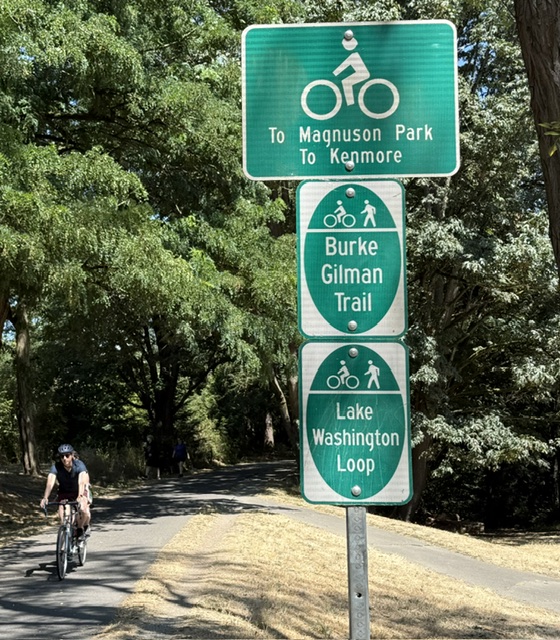
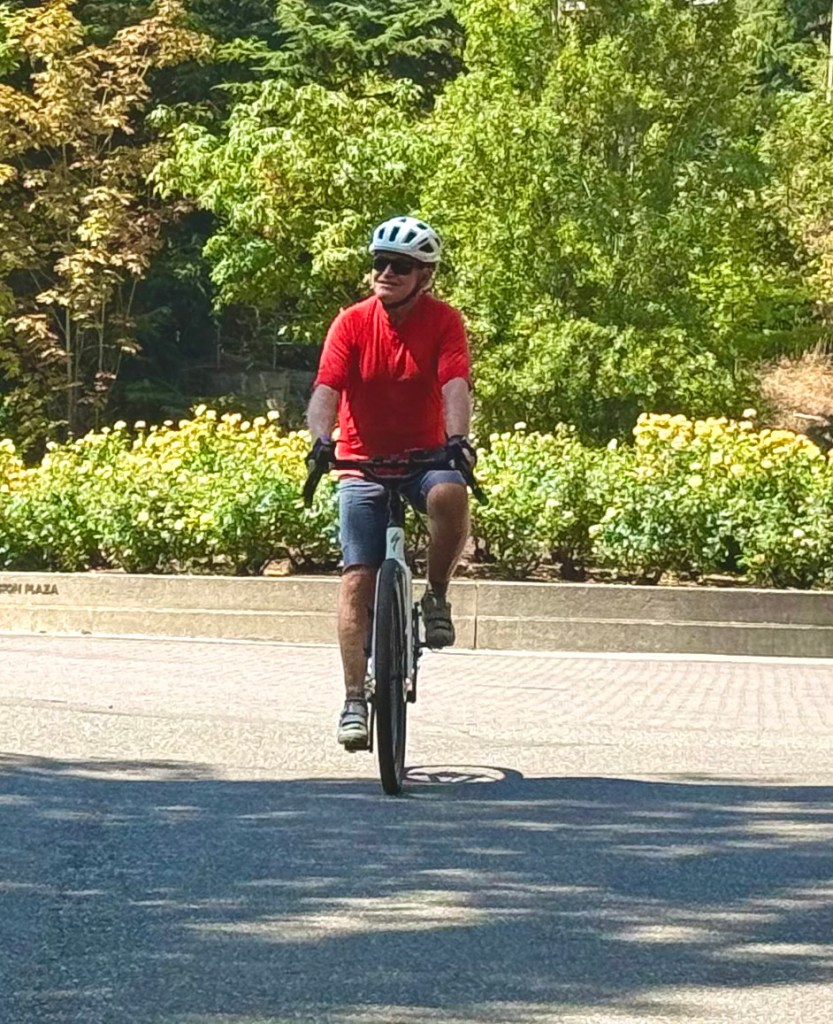
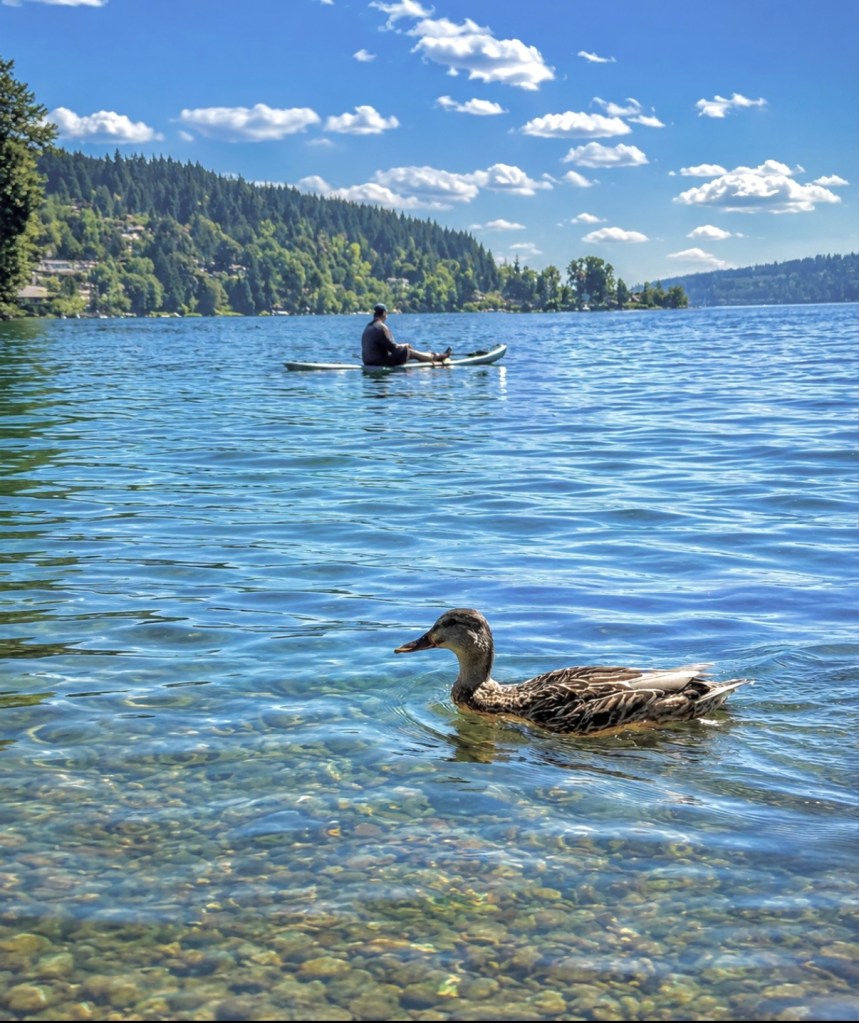
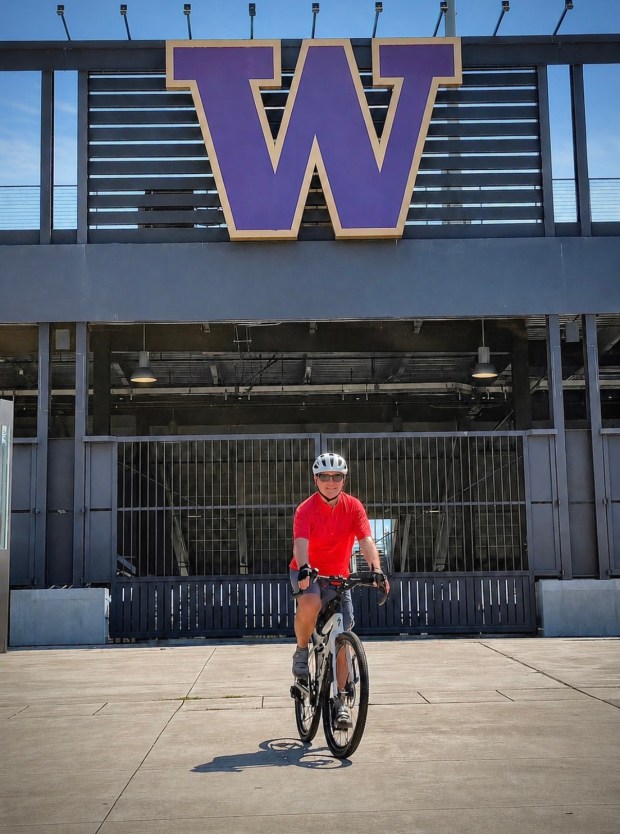
The trail carried me to Lake Washington, its deep blue waters sparkling beneath the morning sun. Sailboats and kayaks dotted the water while the distant hills created a soft, green horizon beyond the lake. I caught a view of Husky Stadium on the shoreline. It was a reminder of how beautifully the university and the city are woven into the landscape surrounding Lake Washington.
As the morning progressed, I made my way to the main campus of the University of Washington. Early August meant most students were away for summer break, and the campus was noticeably more serene than it will be once the fall semester arrives. Yet, it was hardly lifeless. There was an unmistakable youthful energy in the air — students strolling on the sidewalks, cyclists gliding between buildings, and people lingering on campus lawns.
Leaving the university grounds behind, I rejoined the trail and continued toward the Lake Washington Loop. The shoreline became my companion for miles. Kayakers paddled across the calm water, ducks floated lazily near the shore, and beaches appeared unexpectedly through gaps in the trees.
And then came one of those wonderfully simple scenes that somehow captures summer better than any grand landmark ever could. Three elementary school-age children had set up a lemonade stand along the route. Their smiles proudly advertised cold lemonade to anyone willing to stop, so I happily accepted their invitation. After contributing five dollars for a half full cup and answering questions they had about my bike, I was on my way again.
As the day rolled on, I reached the terminus of my planned route, and it was time to turn around. There’s something psychologically different about the second half of an out-and-back ride. The unknown becomes familiar and landmarks that had been discoveries only hours earlier become old friends.
I eventually returned to my downtown Seattle hotel, took the bike to my room and called it a day.
The following morning, I was excited to meet the CLIMATE RIDE guides and fellow cyclists who would become my companions for the week. The days ahead would take us through the extraordinary landscapes of the Pacific Northwest with its mountains, forests, rivers and long ribbons of rail trails.
Day 2 — Seattle To Victoria, British Columbia and Beyond
Miles: 34
Riding the Galloping Goose Rail Trail
Today, finally, the real bikepacking adventure began.
Bikepacking is cycling stripped down to its adventurous essentials. Unlike road biking where the goal might simply be covering miles on pavement and returning home at day’s end, bikepacking means carrying your world with you. Clothing, food, camping gear, tools and everything else needed for several days on the road are loaded on your bike. It’s heavier, the pace a little slower, and gravel trails often replace smooth pavement.
But with that extra weight comes something wonderful: peaceful freedom and opportunities to explore often rural sections of the world and meet the people who live there.
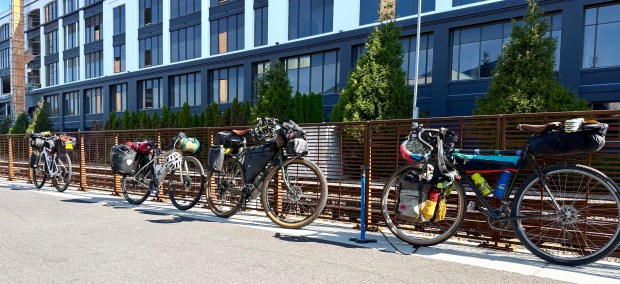
Our group of seven met that morning at Pier 69 on Seattle’s waterfront, our bikes all loaded with camping equipment and more. The Climate Ride guides distributed enough food to last for the first two days of our trip. We quickly packed away the gallon-sized food baggies in our already-bulging bike bags. There was an unmistakable excitement among us. Until now, this journey had existed largely in plans and our imaginations. Standing beside our loaded bikes with Puget Sound stretching before us, it suddenly felt very real.
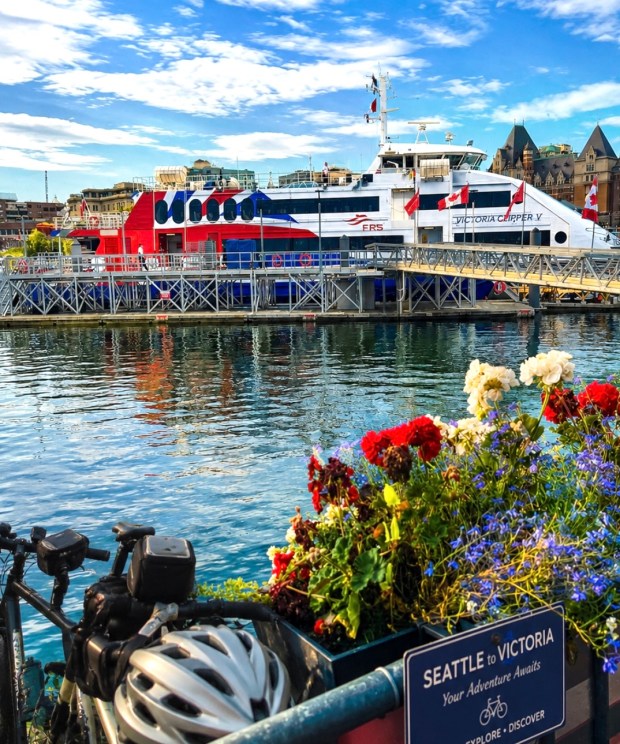
Summer blue skies stretched overhead as our ferry pulled away from the pier. By late morning, after more than an hour on the ferry, Victoria appeared on the horizon. The harbor opened before us with dozens of boats tethered to the marina docks. The handsome architecture of British Columbia’s capital rose beyond the shoreline and sidewalks were jammed with mostly tourists. This majestic Canadian city was a place where its British heritage, maritime history, and Pacific Northwest surroundings somehow fit naturally together.
Then came one of my favorite moments of any cycling trip. We pushed our bikes ashore, climbed on our saddles and started pedaling to places we’ve never before explored.
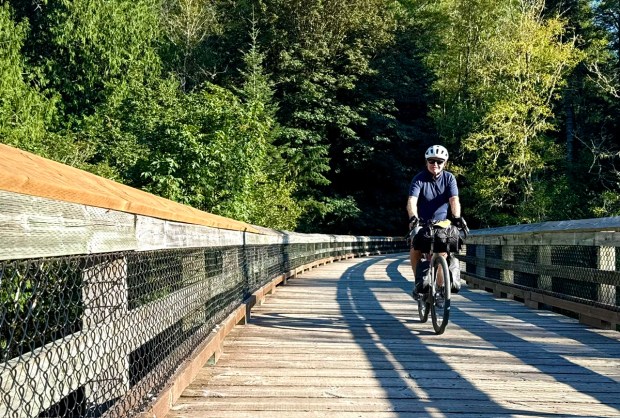
After navigating through the city and quiet neighborhoods, we reached the Galloping Goose Regional Trail, where pavement gradually gave way to the packed gravel rail trail that would define much of our first two days of riding. The trail was once a railway designed to transport freight, logs and lumber to Victoria and communities on southern Vancouver Island. It was abandoned in the 1960’s, and decades later turned into one of the most scenic rail trails in Canada.
Evening arrived and we settled quietly at a campsite near the end of the route. The temperature cooled, conversations faded and our collection of tents were pitched as the moon lingered on the horizon. Everyone seemed ready to sleep.
Everyone except me. I was too excited to let this day end.
Day 3 — Return to Victoria and Riding the Olympic Discovery Trail
Miles: 50
A Ferry to Port Angeles for Pizza. Welcome back to the United States
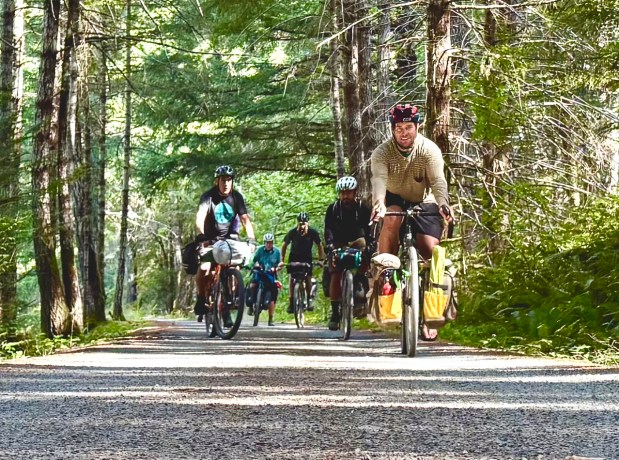
A glorious morning greeted us on Day 3. One thing was becoming clear: I was getting more comfortable pedaling my loaded bike after two previous days of breaking it in on different road surfaces. Our 50-mile day began with us backtracking on the Galloping Goose Trail to Victoria, departing on another ferry across the Strait of Juan de Fuca to Port Angeles, Washington and then connecting to the ODT before finally arriving at our campsite on the Elwah River.
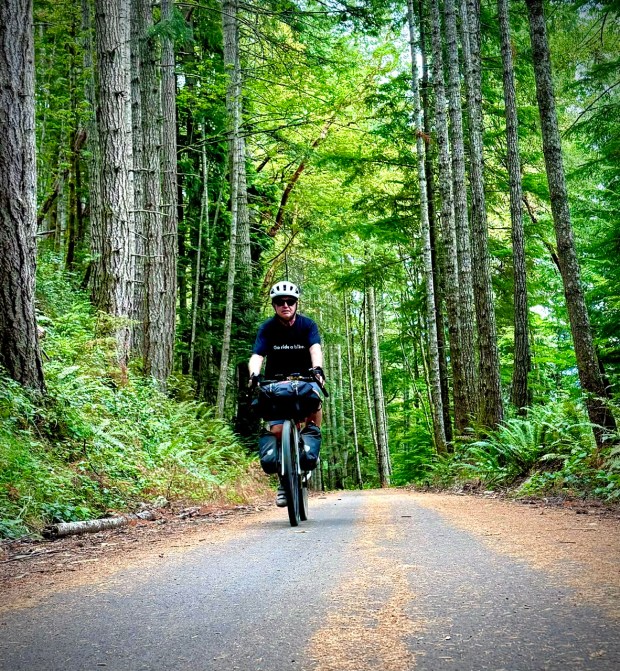
Throughout the day, I couldn’t wait to round the next bend to see if there was more sunshine dancing through the tree branches to the path’s surface below. Nature was in full force — everywhere.
Another sign of nature was how blackberry bushes lined much of the Galloping Goose Trail. The berries were often so plentful and juicy that they weighed the bushes to the ground. We later learned that Jacob had stopped along the way and picked two quarts that would be served up with fluffy pancakes at our campground for breakfast the next day.
Upon our arrival in Port Angeles, we restocked our food supplies at a local market and then made our way down the street to a local pizza place. It was our first opportunity to sit together as a team in a restaurant, talk about how the tour had gone so far, and listen to our guides explain what lay ahead. With all the calories we were burning, it was a treat to drink a couple beers and fill our stomachs.
And then it was time to ride the final few miles to our day’s destination.
Although we were provided with GPX files that we loaded on our phones and head units showing our daily routes, I missed a turn three miles from the campground just as dusk was settling in, and the new route took me twenty minutes out of the way. But, it was all worth it because I followed the Elwah River and enjoyed every minute of watching and listening to its waters dance over and around the stones buried near or beneath the surface.
As darkness began to take control of our campground, I hurriedly set up my tent, rolled out my sleeping bag, grabbed a quick shower and called it a day.
Tomorrow would be a ride I had been anticipating for weeks.
Day 4 — Next Up: The Olympic Discovery Trail (Adventure Route)
Miles: 31
Learning to Survive on Mountainous Single Track
I had equally looked forward to and dreaded this day for weeks. I’d watched multiple YouTube videos, read Facebook posts and thought I knew everything I needed to know about what lay ahead and how to approach this relatively short (20-mile) climb on the slopes of the Olympic Peninsula.
But it wasn’t enough.
As challenging as it was to me — a novice rider of narrow, single track bike paths — it was the best-worst day of riding a bike I’ve ever had. The Adventure Route is just what its name implies: an otherworldly beautiful journey on dirt trails under tree branches so thick they often blocked the sun, narrow hillside tracks lined with ferns and moss-covered rocks, and fallen trees that made me feel as if I was on a different planet. And the sounds of nature — with breezes blowing through tree branches high above and mountain streams flowing down the lush hillsides — provided memories that will never leave my soul.
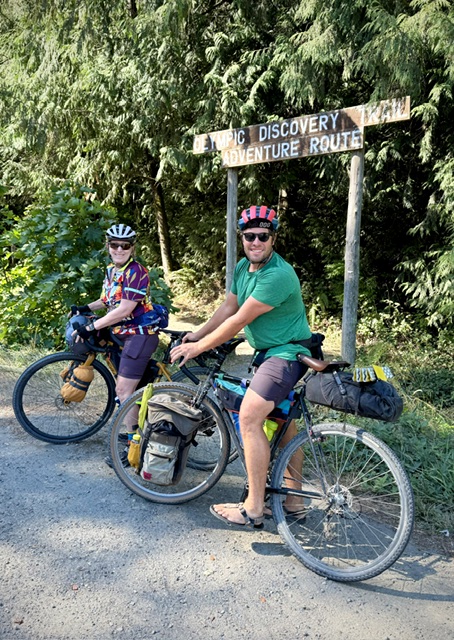
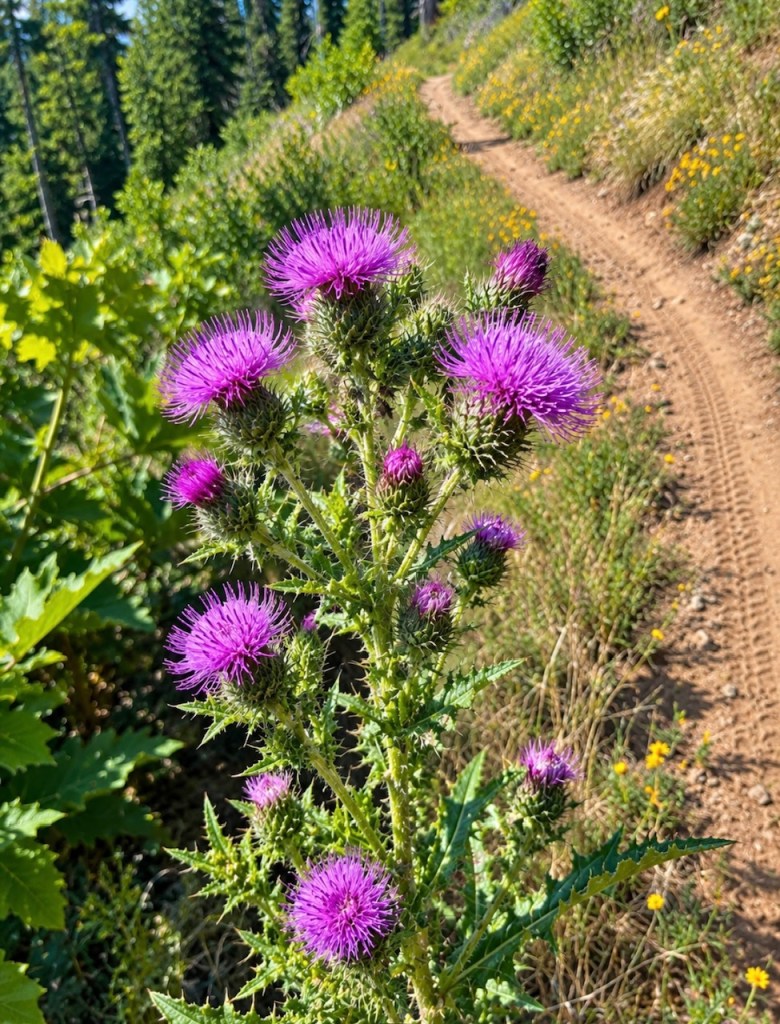
On my loaded gravel bike, it was demanding. The route carried us on twisted trails sometimes barely wider than my handlebars, while exposed roots and embedded rocks demanded constant attention. Switchbacks arrived one after another, with frequent grades of five to eight percent. Thanks to teams of volunteers, the bridges built to cross streams and low points along the route were all in good to excellent condition. It was a day of riding I’ve never experienced in all the miles I’ve ridden, and an afternoon I’ll never forget.
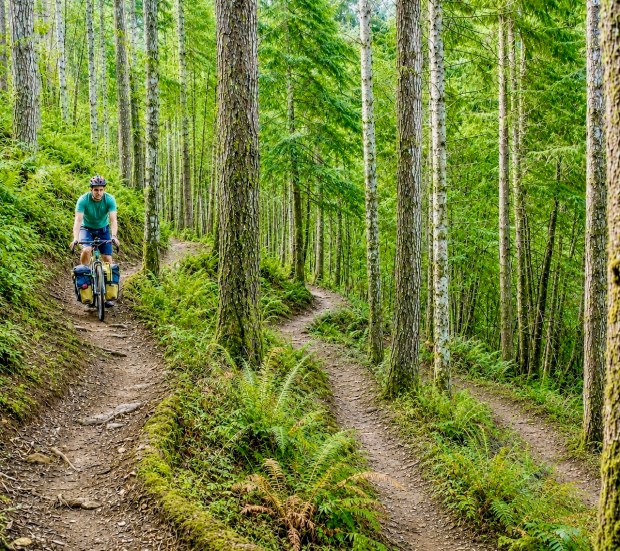
On a stripped-down lightweight mountain bike, the Adventure Route might have felt playful. But with heavy bags top-loaded on my handlebars and on my seat post carrying too much gear, they often shifted my bike’s center of gravity. Much of the day became exercises in patience, balance and momentum. More than once, I found myself unclipping my shoes from my pedals and simply admitting defeat and resorting to pushing the bike along the route. The day was the true meaning of a hiker-biker experience.
Yet, the difficulty was also what made this section so memorable. Between the strenuous climbs to high elevations and threatening descents, the forest occasionally opened and delivered magnificent views across the Strait of Juan de Fuca. Beyond that broad ribbon of blue water was Vancouver Island and the mountains of British Columbia. Then, as we continued on the route, the trail’s picturesque view would frequently disappear behind dense forests into a wonderfully green, almost primeval Olympic Peninsula forest.
There was something humbling about struggling on this rugged trail, realizing that volunteers had come into this remote forest with tools and determination to build—and continue to maintain—the narrow ribbon of dirt and rocks beneath my tires.
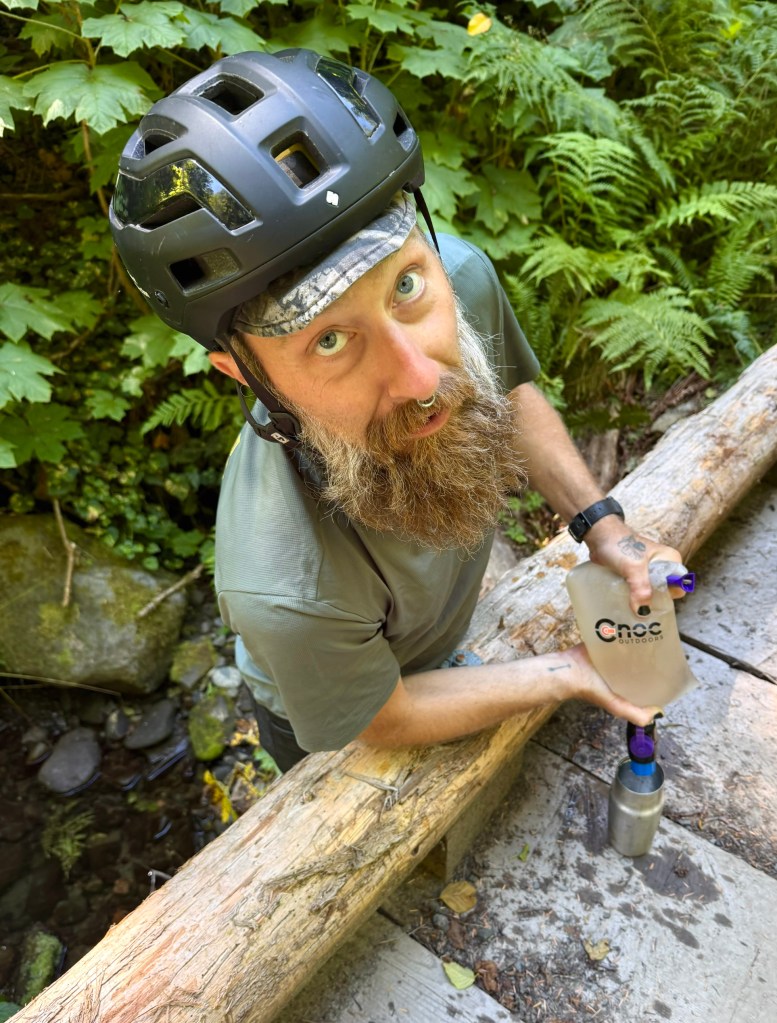
After finally emerging from the hilly terrain. I continued for a few more miles toward Lake Crescent, tired but deeply satisfied by what had been the most challenging day of the week. Soon, the brilliant blue waters of the lake appeared through the trees, surrounded by the steep, forested slopes of the Olympic Mountains. My fellow cyclists and I rolled into our campground, pitched our tents and came together for dinner. After hours of roots, rocks, steep grades and switchbacks, sharing a meal beside one of the most beautiful lakes in Olympic National Park felt like a fitting reward.
As evening settled over Lake Crescent, I sat alone at the water’s edge with an ice cream cone in hand and simply soaked in the beauty that surrounded me. The lake grew more quiet as the light softened over the surrounding mountains. After a tough day, I was happy it had come to an end. My legs were tired, my bike and gear were covered with the evidence of the challenge, and tomorrow promised many more miles.
Day 5 — The Pacific Coast Awaits
Miles: 53
Perfect Trails, Frightening Logging Trucks and a lonely General Store
Morning came early at Lake Crescent. After breaking camp and loading everything on my bike, I joined our team as we rode along the still waters of the lake.
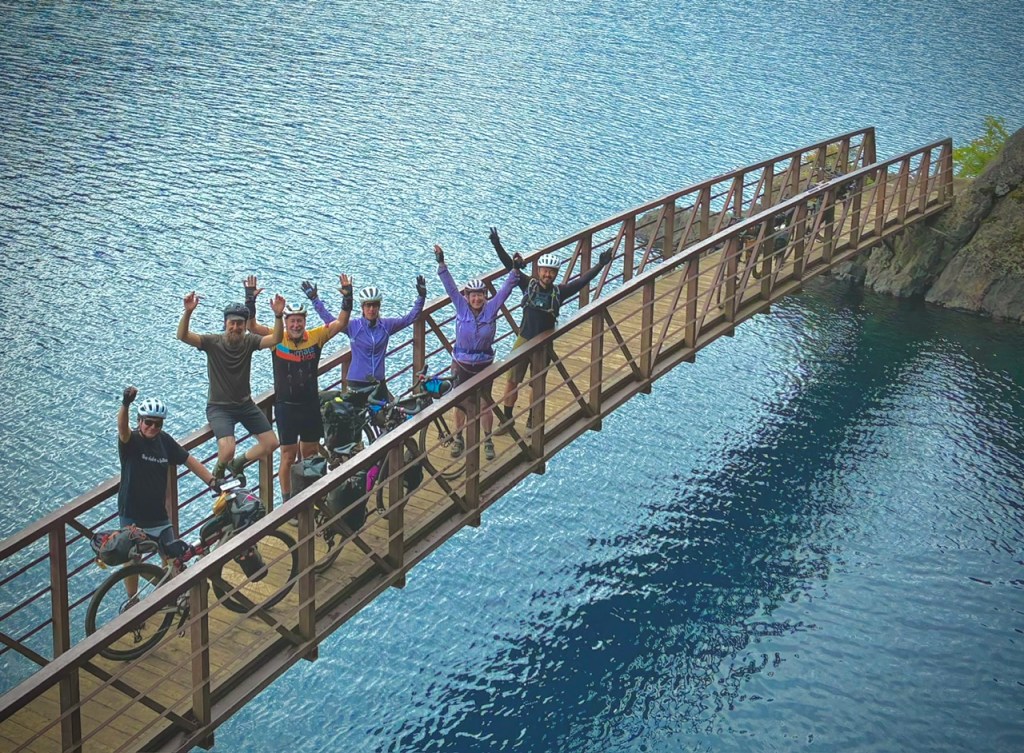
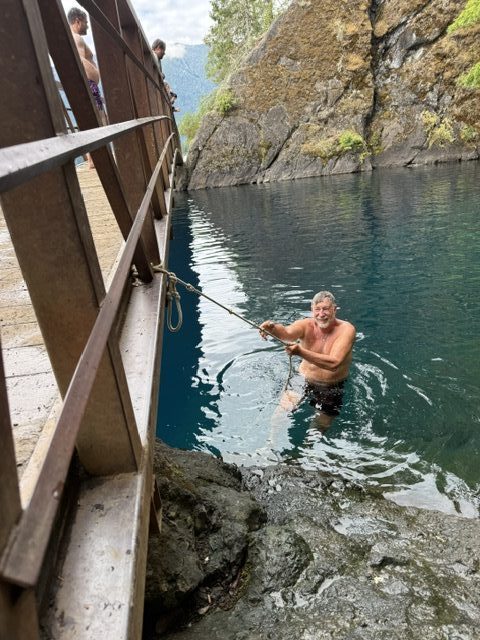
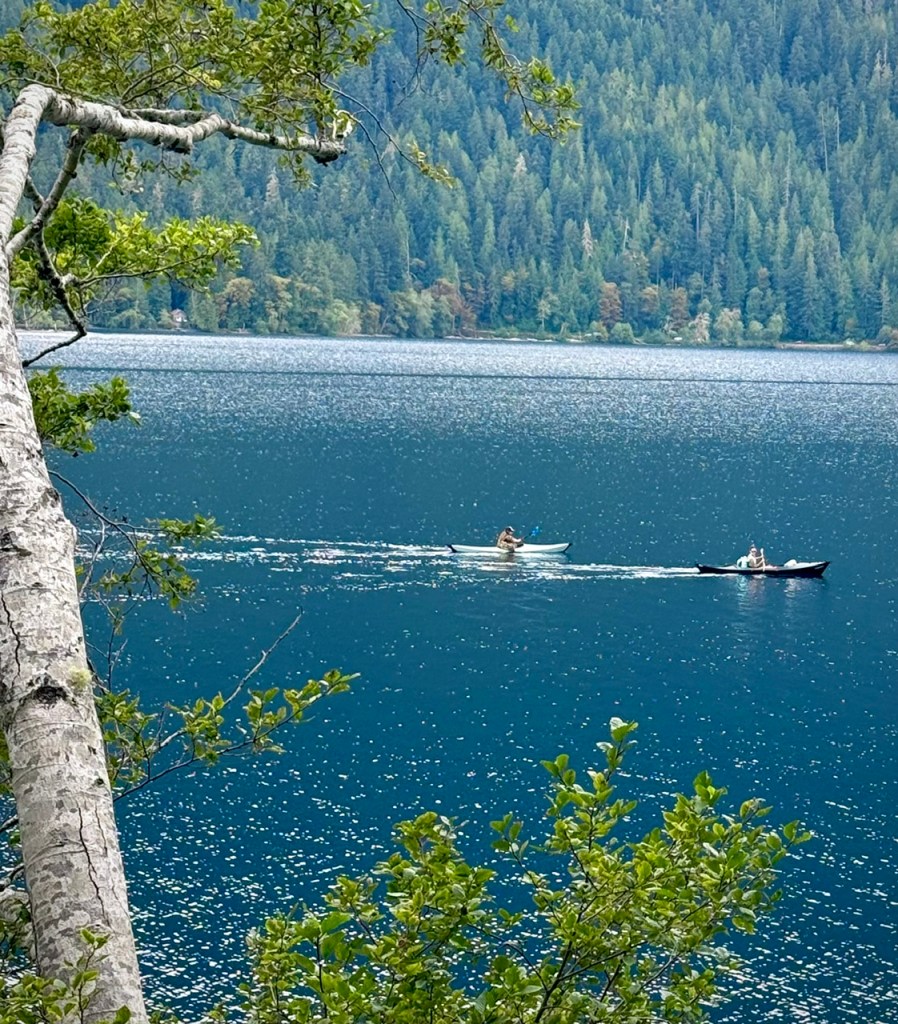
After the punishment of the previous day’s roots, rocks and switchbacks, this was cycling at its most relaxing — so calm, in fact, that some members of our group stopped for a quick swim.
Continuing on, the trail was either smooth tarmac or compacted gravel. It carried us beneath enormous trees with branches forming a green canopy overhead. Morning sunshine filtered through in broken shafts, often splashing patches of light across the pavement beneath our tires. For long stretches there was little to do but pedal, breathe in the cool forest air, and enjoy the simple pleasure of a bicycle rolling easily through beautiful lush countryside.
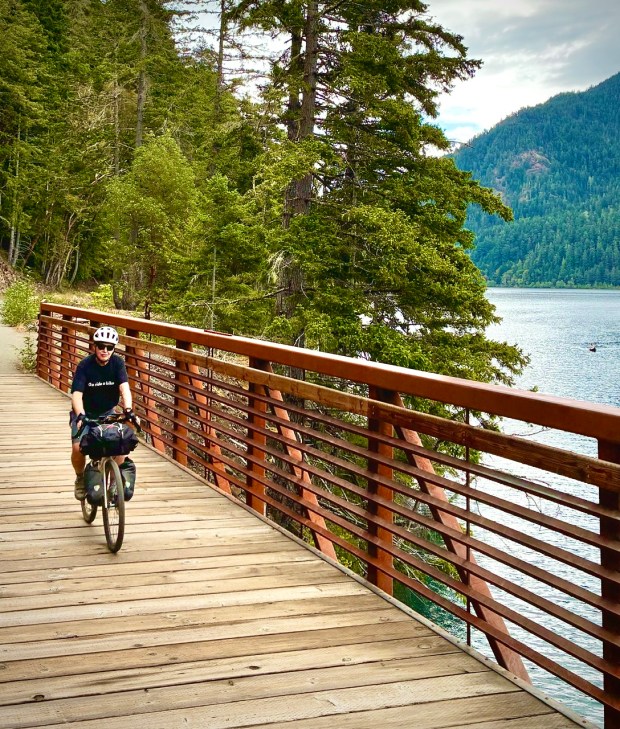
Eventually, the trail gave way to state highways, and the character of the ride changed again. The great forest opened occasionally to scattered houses and mobile homes lining the road. By the time we completed 35 miles, lunch became the dominant subject of conversation.
We finally reached what barely qualified as a town—a small roadside gathering of houses, a post office, and an aging general store that has likely been serving customers for generations.
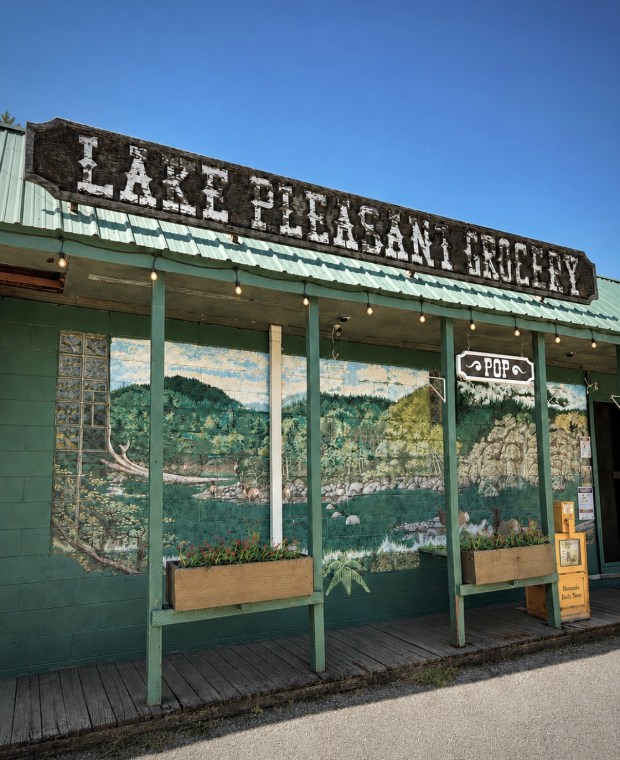
Stepping through the store’s door felt like going back in time. The old wooden floor was made from narrow boards worn dark by decades of boots and shoes.
Several rows of grocery shelves filled most of the room, stocked not with luxuries but with the essentials needed by local residents who lived far from large overstocked supermarkets. Behind the counter stood a pleasant young man ready to take our money. There were rows of colorful lottery tickets on the wall directly over his shoulder and packs of cigarettes on display.
We carried our lunch orders: hot dogs, sandwiches, chips and cold drinks outside and sat together in the open air setting, savoring every bite before climbing back on our bikes for the final 15 miles to the coast.
As we continued westward, I could feel the Pacific Ocean beginning to exert its influence. The temperature dropped, the sunshine often disappeared, and a fine mist hung in the air.
The landscape became greener still. By the time we reached camp, we were surrounded by a temperate rainforest—massive trees seemingly rising forever toward the heavens and ferns growing so thick beneath those kings of the peninsula that they appeared capable of swallowing anything left unattended overnight.
There was, however, a frightening moment that ensured the day’s ride wouldn’t be entirely uneventful.
About halfway through the afternoon as I began to cross a short narrow bridge with a nonexistent shoulder, I sensed something behind me. I didn’t see or hear it at first as much as I felt it— a low vibration coming up from the bridge deck, into my bike, and then running through my body. Simultaneously, there was a growing roar of an engine. I glanced back and saw an enormous logging truck bearing down on me, loaded with freshly cut logs the size of compact cars. In that moment, there seemed to be nowhere safe to go.
All I could do was hold my line. And then, just as quickly as the threat began, it was over. The truck disappeared in the distance as quickly as it had arrived.
I kept pedaling, my heart still raging inside my chest.
Once at our campground, the familiar evening ritual began one last time. We unloaded the necessary items from our bikes and pitched our tents, then headed for the showers where hot water felt especially welcome after dozens of miles on the road. We gathered for dinner and lingered over our final meal together. There was a different feeling around the picnic table that evening. We had spent nearly a week riding together—sharing long miles, difficult climbs, beautiful scenery and plans for future adventures.
We relaxed and made our way to our individual tents. I crawled inside my sleeping bag, tired and content, and listened to the quiet sounds of the forest around me before drifting off to sleep.
Day Six — One Final Adventure
The Beach, A Ferry and Home
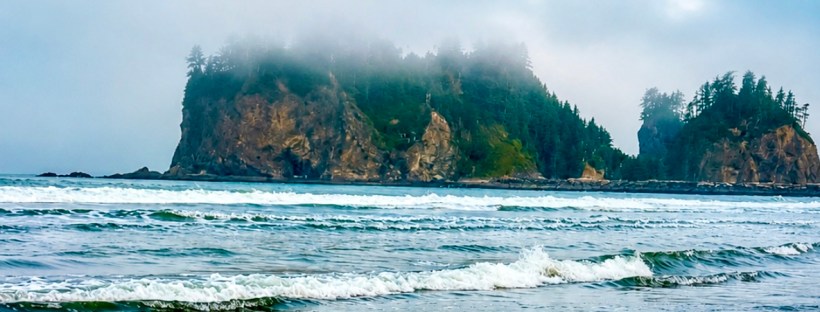
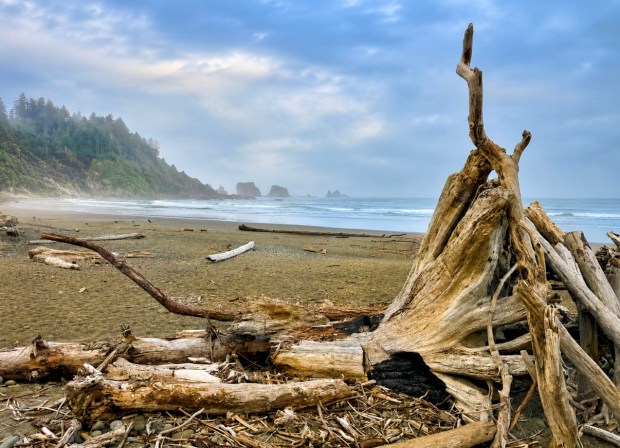
On this final morning, we broke camp, packed our bags, secured our bikes on top of the recently-arrived CLIMATE RIDE TOURS van and made the short drive to a nearby beach. It was a cool, drizzly morning — just as we had learned to expect in this new world of ours. We exited the van and walked the narrow sandy path to the noisy surf.
Islands, shrouded in cloud cover, stood quietly in the distance. We scattered in different directions to enjoy the special solitude of the moment, and I found a massive fallen tree that had washed ashore. I climbed on its barren trunk, closed my eyes and whispered to myself: “savour this moment”. It was magical to reflect on the previous few days, all I’d seen, and how we had come together to complete this unique adventure.
After a shuttle ride to Washington’s Bainbridge Island, we had our final ferry ride of the week — this time returning to Seattle. Our driver dropped us off one-by-one at our departure point or hotel and disappeared as quickly as he had arrived a few days before at the Seattle piers.
It was time to go home.
.


Will you ever be able to top this when next planning an extended bike adventure…. or are you writing your odyssey of combined adventures in your life?
LikeLike
Hi Genevieve. I think I’ll just take my biking adventures one at a time and then see if there’s anything worth writing about. – Joe
LikeLike